
Oak Lawn Epoxy Flooring installs epoxy garage floor systems in Oak Lawn, IL, serving surrounding cities including Chicago Ridge, Evergreen Park, Worth, Alsip and Bridgeview. With 20+ years spent preparing and coating concrete, we build garage floors from the slab up: ground open by machine, checked for moisture, repaired and then built in multiple coats.
A garage floor in this part of Illinois takes a harder beating than almost any other floor in the house. Salt brine drips off the car every winter day, warm tires sit on the same spots for hours, and the slab itself was often poured with no vapor barrier beneath it. A coating chosen for a dry, heated showroom does not survive that, so every system we recommend is picked for the conditions on your floor.
Every proposal names the product line, the number of coats and the finished thickness. You see the moisture test, the crack and spall repairs and the removal of any old coating as separate lines, so the price and the floor can both be checked once the job is done.
What Goes Into a Garage Floor Coating That Lasts
Diamond Grinding Instead of an Acid Etch
The single biggest reason garage coatings fail is a weak bond, and the bond is decided before any epoxy is mixed. We open every slab with a diamond grinder or a shot blaster, which removes the smooth cement paste, old sealers and oil-soaked surface layer and leaves a measured ICRI concrete surface profile.
An acid etch, the method printed on every store-bought kit, only roughens the very top of the slab and leaves salts behind if it is not rinsed perfectly. It also does nothing to sealers or paint. That is why so many etched floors begin peeling at the tire lines within the first year.
Testing for Moisture Under the Garage Slab
Residential code has long let garage slabs go without the vapor retarder required under the house, and most older garages in Oak Lawn were poured exactly that way. Vapor moving up through bare soil and concrete can push a coating off from underneath, and it shows up as blisters or bubbles weeks after the install.
We run an ASTM D4263 plastic sheet test, and a calcium chloride emission test where the slab is doubtful, before the price is final. If the numbers are high, the scope changes to a moisture-tolerant primer, or we tell you plainly that the slab should not be coated yet.
Repairing Cracks, Spalls and Pitted Concrete
Cracks, spalled edges and pitting from years of road salt are mapped during the estimate and priced as their own lines. Shallow pits are filled with a fast-setting repair mortar or epoxy paste, cracks are chased and filled, and control joints are either honored or filled depending on the look you want.
When sections of the slab have heaved, sunk or broken loose, coating over them would only hide the problem for a season. In that case we say the floor needs concrete repair or replacement first, and we would rather lose the coating job than install a floor we expect to fail.
Garage Floor Systems We Install
Flake Epoxy Garage Floors
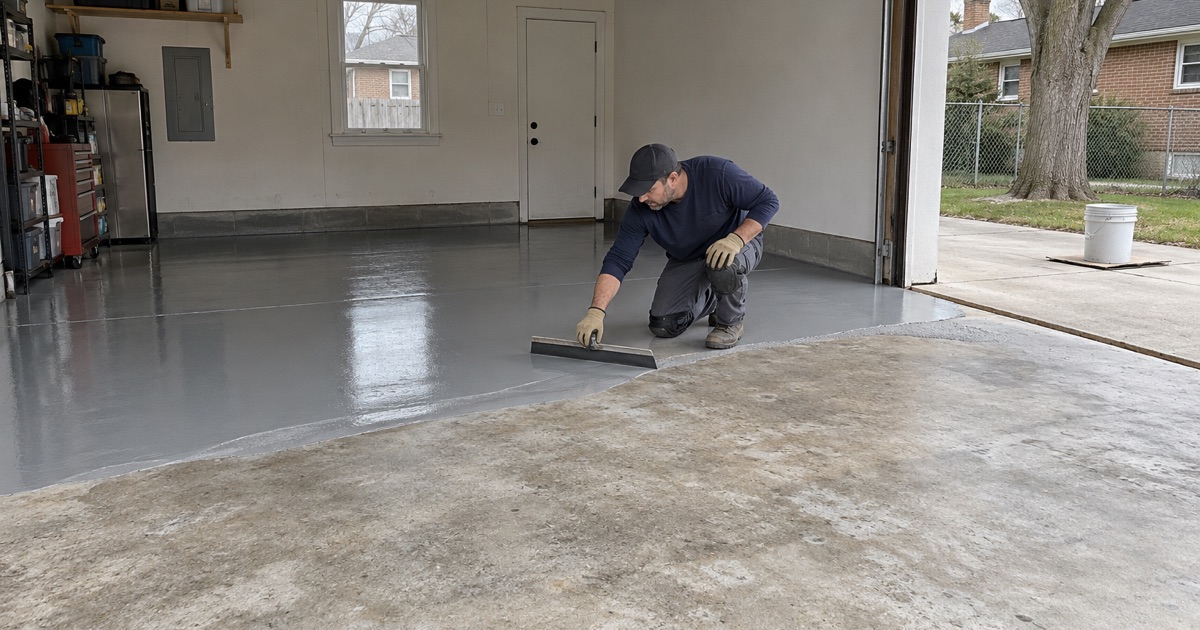
The most requested garage system is a full flake broadcast: a 100% solids epoxy base coat, vinyl flakes broadcast until the surface is fully covered, then a clear polyaspartic or polyurea topcoat. The flakes hide slab blemishes, add texture underfoot and disguise dust between cleanings.
Chip size and blend change the look a lot. Smaller chips read like granite from a few feet away, larger chips look bolder, and lighter blends brighten a garage that has only one ceiling fixture.
Solid Color and Quartz Garage Floors
A solid color epoxy garage floor suits a workshop or a utility space where function matters more than pattern. It shows dirt more readily than flake, so it is best for owners who sweep often, and it is usually the least expensive full system.
Quartz broadcast floors use colored quartz aggregate instead of flakes. They are harder and grittier than a flake floor, which makes them a strong choice for an apron or a garage used as a wet workspace.
Polyaspartic Topcoats for Speed and Sunlight
Polyaspartic and polyurea topcoats cure quickly, resist hot tire pickup and stay clear under the sunlight that pours in when the door is open. Standard epoxy yellows along the door line over time, so we finish most garage floors with a UV-stable topcoat even when the base is epoxy.
The fast cure is a benefit and a constraint at once. It shortens the time before you can walk on the floor, but it also gives the crew a short working window, so polyaspartic floors are installed in planned sections by a crew that has done it many times rather than rolled out in one rushed pass.
Living With Winter, Salt and Hot Tires
Brine, Rock Salt and Calcium Chloride
Rock salt and calcium chloride deicers soak into bare concrete, then expand through freeze-thaw cycles and scale the surface apart. A sealed garage floor keeps that brine on top where it can be squeegeed out of the door. We choose garage systems with chemical resistance to chlorides rather than a decorative coating that softens under them.
The apron and the first few feet inside the door take most of the abuse, because that is where snow melts off the wheel wells. We pay extra attention to the edge where the garage slab meets the driveway, sealing it cleanly so meltwater cannot creep under the coating and lift it from the front edge back.
Hot Tire Pickup and Thin Coatings
A warm tire pressed onto a thin coating softens it, and when the car backs out the coating lifts with the tire. It happens most with one-part and water-based products. A thick, fully cured 100% solids system with a hard topcoat resists it, which is why we never sell a single-coat garage floor.
Cure time matters here too. A floor that is driven on before it has hardened can mark or lift even when the products are right, so the drive-on time in your proposal is a firm instruction, and we lengthen it when the slab is cool.
Cold Slabs and Winter Installs
Epoxy and polyaspartic resins need a minimum slab temperature to cure properly, and coating near the dew point traps moisture and causes amine blush. We measure the slab and the dew point spread on the day. An unheated detached garage in deep winter is told to wait for warmer weather, or to run heat for several days before and after the install.
Spring and fall are the busiest seasons for garage floors around Oak Lawn for exactly this reason. Booking early in those windows gives the slab moderate temperatures for both the install and the cure, and it means you are parking on a finished floor before the first salt trucks roll out.
Before You Sign a Garage Floor Contract
What Changes the Price
Square footage, how much repair the slab needs, whether an old coating must be ground off and the system you choose all move the number. A two-car detached garage at the back of a lot with a cracked apron prices differently from a newer attached garage with a clean slab, and the proposal shows why.
When you compare quotes, compare the preparation method, the coat count and the finished thickness before the bottom line. A much lower price almost always means an etch instead of a grind, a single coat instead of a build, or skipped crack repair, and each of those shows up later as peeling.
Contracts, Consumer Rights and Warranties
Home repair work above the state threshold in the Illinois Home Repair and Remodeling Act gets a written contract and the Home Repair: Know Your Consumer Rights pamphlet before we start. We also walk you through what the coating warranty excludes, and moisture coming up through the slab is the first exclusion we name.
Illinois has no state license for floor coating, so we also confirm what your village asks of contractors, whether that is registration, a bond or a certificate of insurance, before the job goes on the calendar. That way nothing about the paperwork delays the install once the floor is ready.
- 20+ Years Coating Concrete
- Moisture Tested Before Pricing
- Free Written Estimates