The Epoxy Garage Floor Process, Start to Finish
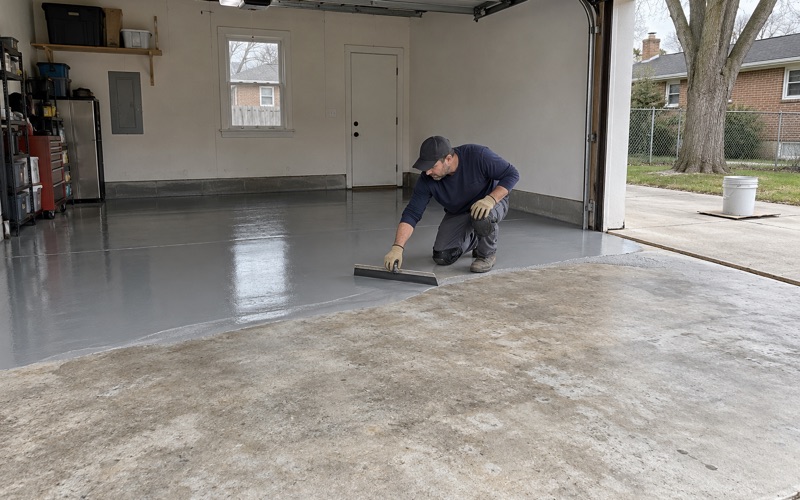
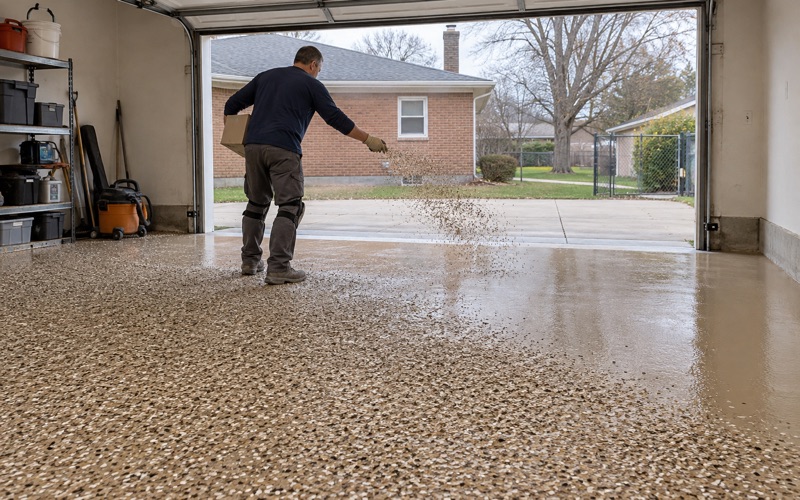
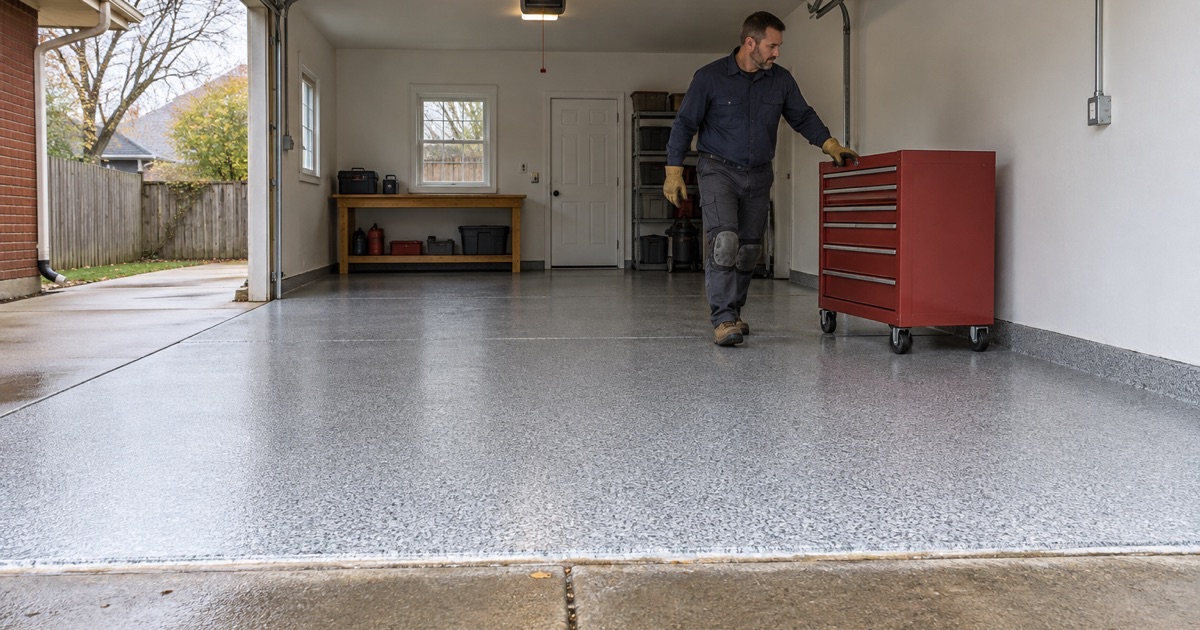
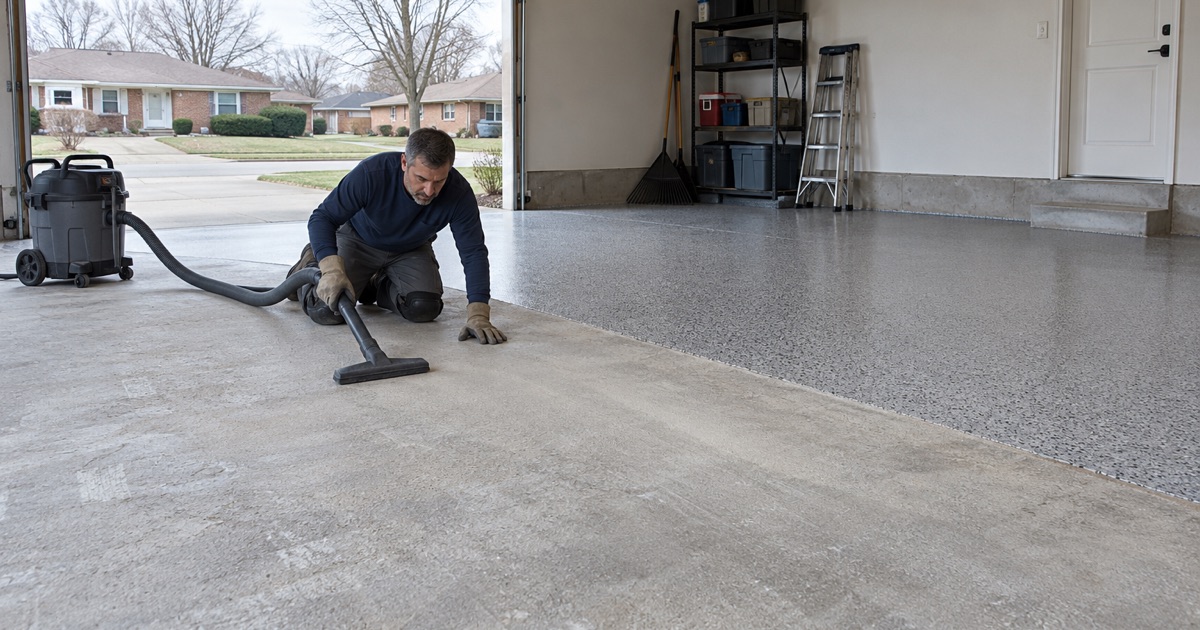
A garage job runs in a fixed order: moisture and crack inspection, grinding, crack and spall repair, the base coat, any flake or quartz broadcast, and the topcoat. We hand you the walk-on and drive-on times in writing, so you know exactly when the car can come back in. Most two-car garages are ground, repaired and coated within one to two working days, with the cure period after that set by the products and the slab temperature rather than by a promise made at the sales visit.
Coating Detached Two-Car Garages
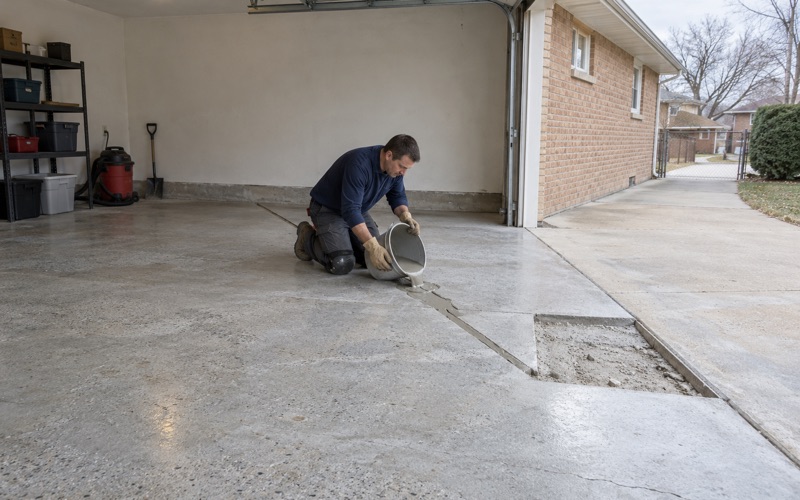
Most Oak Lawn homes park in a detached two-car garage at the back of the lot, and those slabs sit colder and often damper than an attached floor. We check slab temperature and dew point on the day rather than trusting the forecast, because a cold slab slows cure and invites amine blush. Detached garages also tend to have older, thinner slabs with more settlement cracking near the apron, so the repair line on those quotes is usually longer than on an attached garage.
Why We Grind Off Sealer and Old Paint
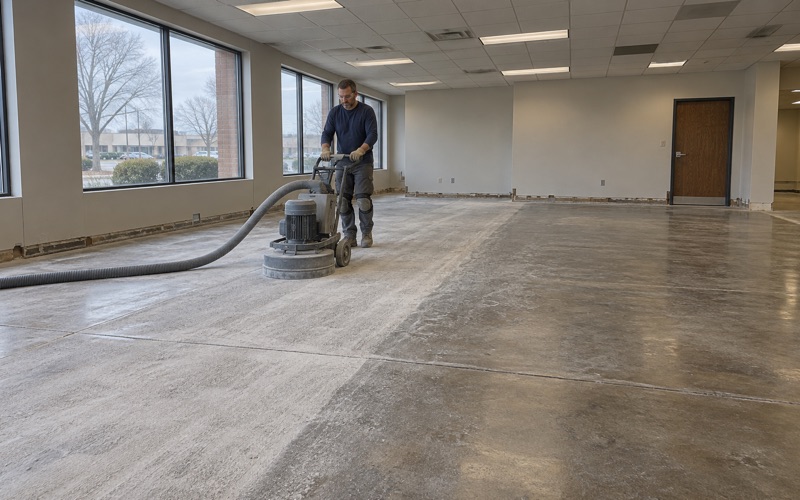
A coating can only bond as well as the layer under it, and a slab carrying an old sealer or garage paint gives it nothing sound to grip. Diamond grinding removes those films and opens the concrete, which is why a coating rolled over paint lifts in sheets within a season. The grinder also cuts a measurable ICRI concrete surface profile, the texture the manufacturer’s data sheet asks for, so the bond is designed rather than hoped for.
Moisture Testing a Garage Slab
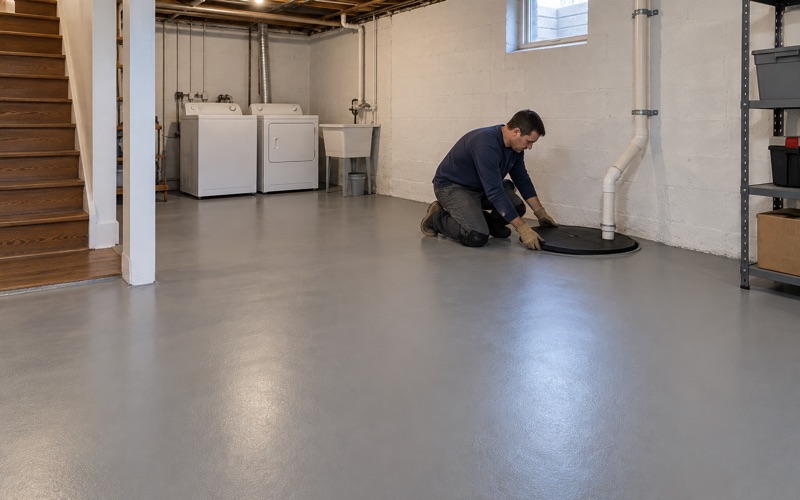
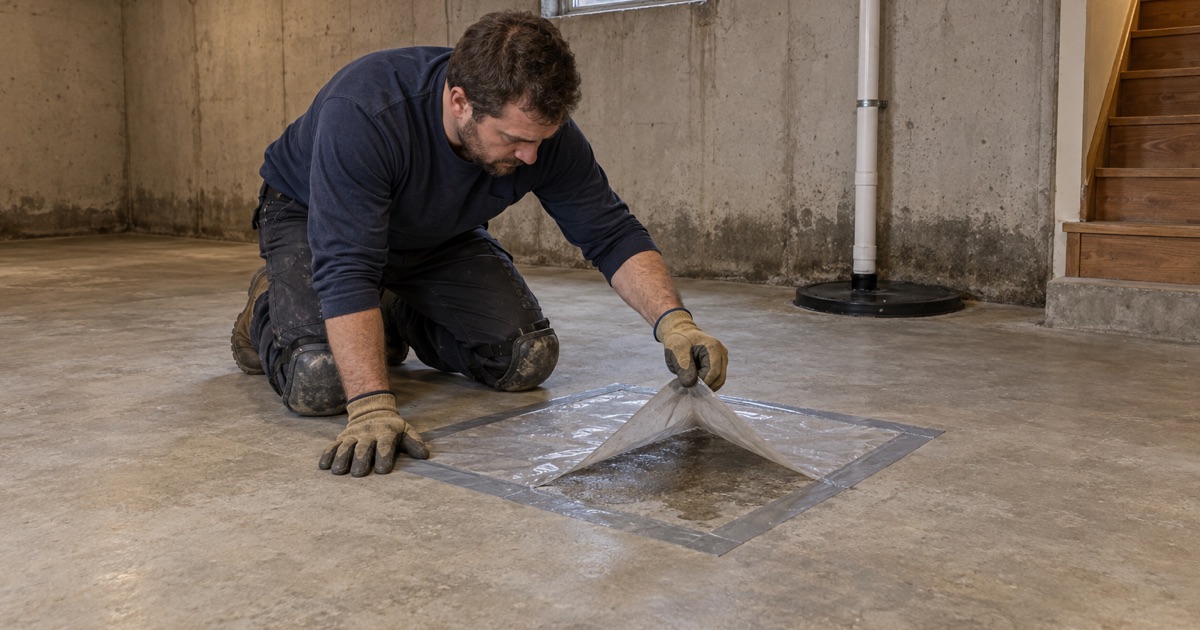
Many garage slabs were poured with no vapor retarder underneath, since residential code has long allowed that exception for garages. We run a plastic sheet test or a calcium chloride emission test before pricing, because vapor pushing up from below is what blisters a coating that looked fine on day one. When a reading comes back high, the proposal changes before you sign it, adding a moisture-tolerant primer or recommending against coating, instead of the problem surfacing as a warranty dispute later.
Garage Floor Crack and Spall Repair
Hairline cracks, spalls and pitting are mapped and filled with a repair material before coating, so they do not telegraph through the finish. When a slab has heaved, settled badly or broken into loose pieces, we tell you it needs replacement first, since no coating holds a floor together. Moving cracks get a flexible filler rather than a rigid one, so the joint can still breathe without splitting the finish above it.
Rock Salt and Brine on Bare Concrete
Calcium chloride and rock salt deicers soak into unsealed concrete, then expand through freeze-thaw cycles and flake off the surface. A sealed, coated floor keeps that brine sitting on top where it can be squeegeed away, and a textured topcoat keeps the slush from turning the floor slick. Garages that already show scaling near the door can still be coated, but the flaking layer has to be ground down to sound concrete and patched first.
Cold Weather Coating and Waiting for Spring
Resins cure slowly or not at all on a cold slab, and coating within a few degrees of the dew point traps moisture under the film. An unheated garage in deep winter is told to wait or to heat the space for days ahead, because a rushed winter install is a spring peeling job.
Stopping Hot Tire Pickup
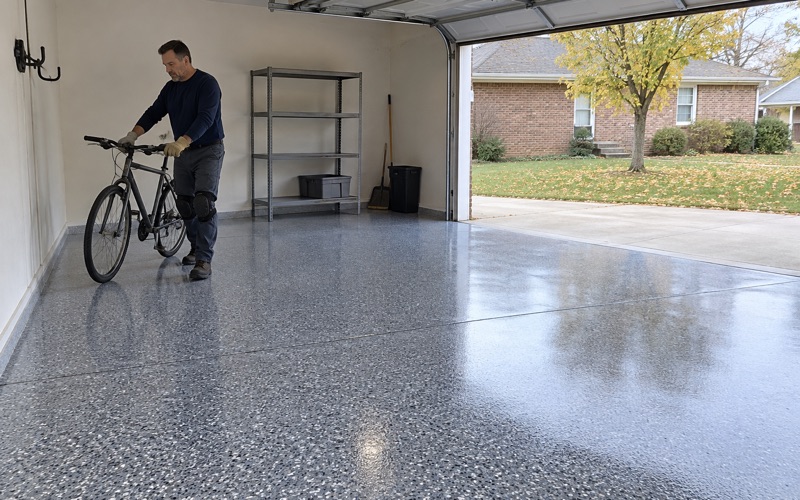
Warm tires soften thin, low-solids coatings and pull them off the slab, leaving bare patches exactly where you park. We build garage floors with 100% solids epoxy and a polyaspartic or polyurea topcoat, a thicker system that resists softening rather than a one-day roll-on film.
Store-Bought Kits Versus a Ground Professional Floor
Big-box kits rely on an acid etch and a thin, water-based coating, which is why so many peel after the first winter. A professional floor is ground, repaired, built in multiple coats to a stated thickness and topped with a wear coat, so the comparison is less about price than about lifespan. A kit also leaves cracks, old sealer and moisture untouched, and those three problems decide how long any coating lasts.
What an Epoxy Garage Floor Costs
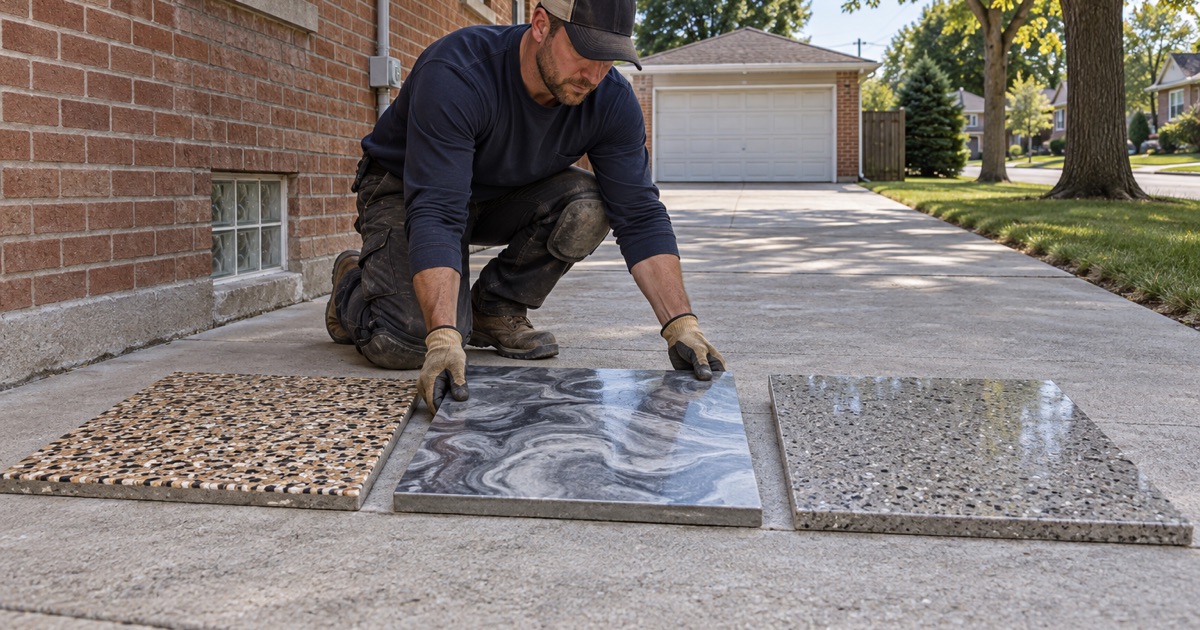
Price moves with square footage, slab condition, the amount of crack and spall repair, whether old coatings must be removed and which system you choose. Flake and metallic floors cost more than a solid color, and we price each item as its own line so nothing hides in a lump sum. That itemized format also lets you compare our quote against another contractor’s on the same terms, line for line, rather than guessing what a lower number left out.
What a Coating Warranty Leaves Out
Nearly every floor coating warranty excludes failure caused by moisture coming up through the slab, and many exclude impact damage and chemicals the system was not rated for. We explain those exclusions before you sign, so the warranty you are relying on matches the floor you are buying.