
Oak Lawn Epoxy Flooring provides concrete grinding and surface preparation in Oak Lawn, IL, serving surrounding cities including Chicago Ridge, Evergreen Park, Worth, Alsip and Bridgeview. After 20+ years of preparing slabs for coatings, polish and new flooring, we know that the work done before the first coat decides how long the finished floor lasts.
Most floor coating failures are bond failures. A resin rolled onto a smooth, sealed, oily or weak surface has nothing sound to grip, and it peels no matter how good the product was. Grinding and shot blasting remove that weak surface and leave fresh, porous concrete with a measured texture the next layer can lock into.
We offer surface preparation as part of our own coating and polishing work, and as a standalone service for property owners and other flooring trades. Either way, the target profile, the equipment and the dust control plan are agreed before the machines are unloaded.
Diamond Grinding and Shot Blasting
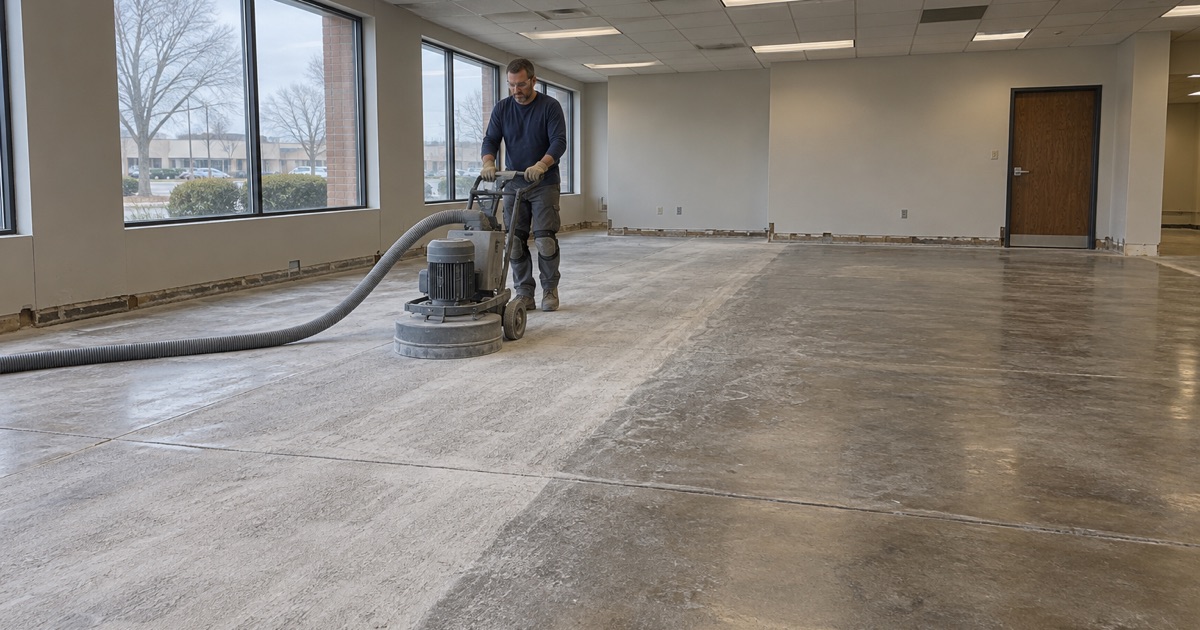
Diamond Grinding for Coatings and Polish
A diamond grinder uses rotating heads fitted with metal or resin diamond segments to abrade the concrete. Coarse metal-bond diamonds cut through sealers, paint, thin coatings and the weak cement paste on top of the slab, while finer tooling refines the surface for polishing.
Grinding is our default on garages, basements and most commercial floors because it handles edges, uneven slabs and mixed coatings well. It also flattens high spots and joint lippage, which a shot blaster cannot do.
Shot Blasting Large, Open Floors
A shot blaster throws small steel shot at the slab, then recovers the shot and the dust in one pass. On large, open warehouse and retail floors it produces a uniform texture quickly, and the profile can be adjusted by changing the shot size and the travel speed.
Shot blasting does not reach tight edges or corners and does not flatten the floor, so we often pair it with edge grinding. The choice between the two depends on the size of the space, the coating being removed and the profile the system calls for.
Why We Never Acid Etch
Acid etching is the method printed on most store-bought coating kits. It only roughens the very top of the slab, leaves an uneven profile, can leave salts behind if not rinsed perfectly and does nothing to remove sealers or paint.
For a professional floor, those weaknesses are not acceptable. Every slab we coat is opened mechanically, and that is a fixed part of our method rather than an optional upgrade.
Concrete Surface Profiles and Why They Matter
Understanding ICRI CSP 1 to 10
The International Concrete Repair Institute defines concrete surface profiles on a scale from CSP 1, nearly smooth, to CSP 10, very rough. Coating manufacturers specify which profile their products need, and thin sealers need a much finer profile than thick overlays or self-leveling toppings.
We grind or blast to the profile the product data sheet calls for and compare the result against the standard ICRI profile references. That turns surface prep into something measurable rather than a guess about whether the floor looks rough enough.
Matching the Profile to the System
A thin coating over a heavy profile can leave peaks poking through, and a thick system over a smooth profile may not bond well. Matching the profile to the product prevents both, and it is one reason two quotes for the same floor can differ.
For polished concrete the goal is different again: a flat, refined surface rather than a rough one. The grinding sequence for polish is planned to reach a specific finish, from cream to full aggregate.
Removing Old Coatings, Adhesives and Contaminants
Paint, Epoxy and Sealers
Old garage paint, failing epoxy and clear sealers are common on floors around Oak Lawn and all need to come off before a new system goes down. Thin films grind off quickly, while thick or rubbery coatings may need aggressive tooling or a scraper first.
Where an old coating is soundly bonded and compatible, it can sometimes be ground and coated over. We test adhesion before making that call, and anything peeling or blistered is removed completely.
Tile Mastic, Carpet Glue and Asbestos Testing
Basements and older commercial spaces often have black mastic, carpet glue or thin-set mortar left from removed flooring. These materials load up diamonds, smear and need special tooling to remove cleanly.
Black mastic from older tile can contain asbestos, so it is tested before any grinding. Where abatement is needed, that work is done by the right contractor before we prepare the slab.
Oil, Grease and Chemical Contamination
Garages, repair bays and kitchens often have oil and grease soaked into the concrete. Grinding removes surface contamination, but deep oil can wick back up, so heavily stained areas are degreased and tested before coating.
Where oil keeps returning after cleaning, we may recommend an oil-tolerant primer or cutting out and patching the worst sections. Coating over a slab that is still weeping oil only moves the failure a few weeks down the road, and we would rather explain that at the estimate than at a warranty call.
Dust Control and Clean Work
Vacuum Capture at the Machine
All our grinders run with industrial vacuums connected directly to the grinding head, capturing dust at the source. That protects the people in the building, keeps dust out of HVAC systems and makes the slab easier to inspect as we work.
In homes and occupied businesses we also seal off the work area and plan the route in and out. Grinding inside a busy clinic or store is scheduled around opening hours when needed.
Keeping Slurry Out of Drains
Wet grinding and polishing produce a cement slurry that can clog drains and harm waterways. We collect slurry and dust rather than washing it toward a floor drain or a storm inlet, which matters in a village that has worked hard to reduce sewer backups and flooding.
Collected material is bagged and removed from the site with our equipment. Clean disposal is part of the quote, not an extra, so you are not left with a drum of slurry in the garage or a sediment-stained driveway after the crew leaves.
- 20+ Years Coating Concrete
- Moisture Tested Before Pricing
- Free Written Estimates